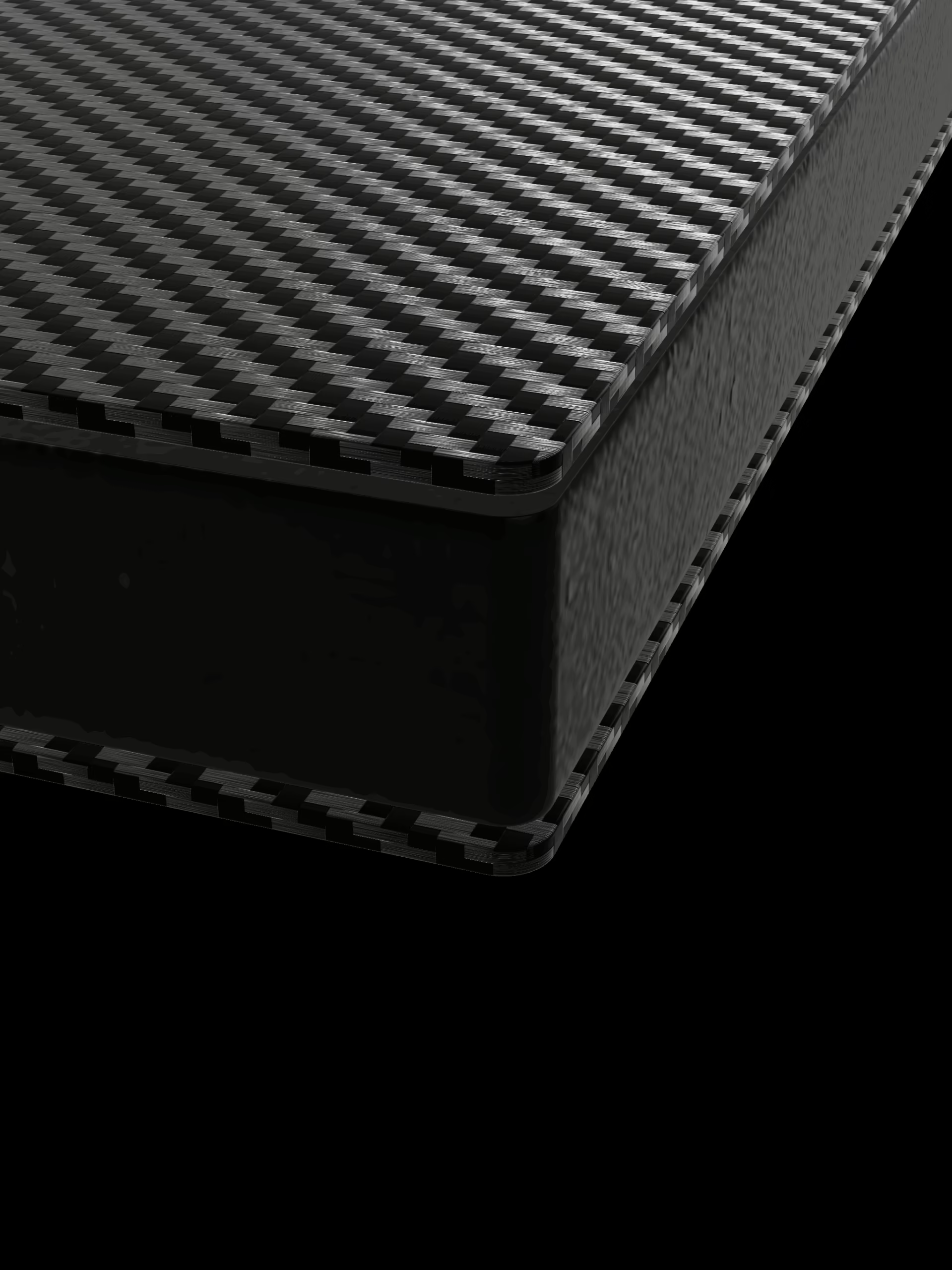
Sandwich construction is a technique from the aviation and high-performance industry that's now being applied in modern vehicle building.
Structure
The structure consists of three layers:
- Outer carbon fiber layers
- A lightweight core (foam or honeycomb core)
- An inner carbon layer
How It Works
This structure works on the principle of the I-beam. The spatial separation of the outer layers creates enormous bending stiffness at minimal weight.
The core acts as a "spacer" and gives the component volume without significant weight increase.
Advantages for Campervans
In the 3.5-ton segment, carbon sandwich construction offers crucial advantages:
Weight Savings
Enables more payload for technology, batteries, and water tanks – crucial for true autonomy.
Stability
Significantly higher than aluminum, ideal for off-road use and temperature fluctuations.
Longevity
Corrosion-free and UV-resistant. The material practically doesn't age.
Thermal Properties
The core provides insulation and reduces heat loss – less heating energy needed.
Applications at VANYX
VANYX uses this technology for:
- Carbon rear extensions
- High roofs
- Specialized construction components
The goal: Combine luxury, off-road capability, and autonomy in a lightweight vehicle.
Conclusion
Carbon sandwich isn't a gimmick, but a technically sound solution for the challenges of modern campervan building.